

Rudamina Mound – Prelomčiškė Mound – Radžiūnai Mound – Alytus Mound – Memorial Museum of Vincas Krėvė-Mickevičius – Merkinė Mound – Rooster Dune of Kloniai Hill – Šaudzykla – Visitor Centre of Dzūkija National Park in Marcinkonys – Exhibition of Hollow-Tree Beekeeping Apiary – Margionys – Information Centre Girios Aidas – Švendubrė Village with the Great Stone and Views of Raigardas Valley – Leipalingis.
Distance travelled from the Lithuania-Poland border – approximately 220 kilometres.
Duration – 2 days.
Overnight stay is possible at one of many homesteads by Dusia or Metelis lakes, in Alytus or Druskininkai. Accommodation must be arranged in advance. More detailed information is available at tourism information centres; they will offer the best options.
Embark on a journey where every step leads deep into the past – into the mysterious Yotvingian land, where mounds recall warriors’ battles, legends come alive in rustling forests, and the breath of ancient gods can still be felt in the reflections of rivers and lakes. This is a route where nature’s grandeur, history’s echoes, and the magic of legends intertwine.
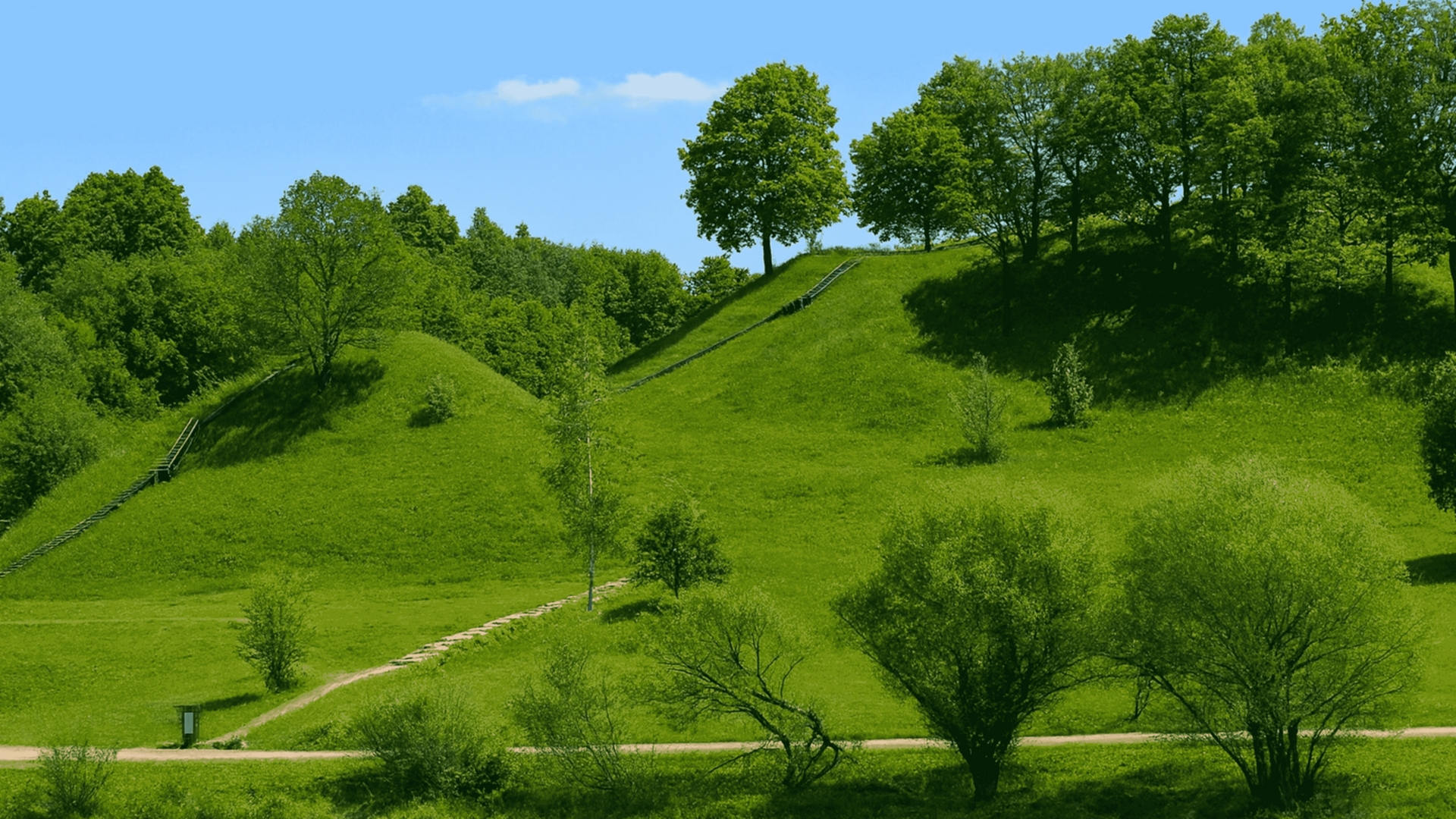
We invite you to start your journey from Rudamina Mound, where Duke Ringaudas’ castle once stood proudly. When you climb the mound, you will feel how the quiet wind brings the echo of battles and the whisper of legends – perhaps you will even hear the footsteps of brave girl Raudonė. It is said that enchanted treasures lurk in the mound, and the panorama opening in the distance reminds of horizons unmoved by time.
On the shore of Dusia Lake, Prelomčiškė Mound guards a legend about a girl Onelė and the devil who proposed to her, who, it is said, piled up this hill. When you reach the top, you will see the “the Dzūkija Sea” and feel the mysterious connection of water and earth, where myths merge with reality.
In Vidzgiris Botanical Reserve, on the Nemunas bank, there is Radžiūnai Mound, surrounded by 9 km of educational trails. Legend tells that two brother counts piled up this hill, and archaeological findings testify to a settlement here as early as the 2nd -5th century.
Alytus Mound is a place where the legend of Alytas and priestess Mirgrausėlė lives to this day, while miraculous frogs live in the Alytupis stream flowing near the mound – they are said to bring love. Nearby there is Lithuania’s highest pedestrian bridge, from which the Nemunas opens up as if from the eyes of ancient gods.
Legends about mounds are a living form of memory, introducing us to our ancestors’ worldview. The same are proverbs, sayings, and folk songs collected by Vincas Krėvė-Mickevičius. In his memorial museum in Subartonys, you will see book manuscripts, personal items, and hear historical stories about the daily life that the writer so masterfully conveyed in his works.
An impressive confluence of the Nemunas and the Merkys opens up from Merkinė Mound – as if nature itself decided to meet here. This is one of the oldest settlements in Lithuania, where Jogaila possibly granted Magdeburg rights to Merkinė and Vilnius.
This region is distinguished by very light and sandy soil, and Kloniai Hill (Rooster Dune) is a living, moving continental dune that amazes with white sand and wind-created forms in the forests. Here you can feel the real spirit of the seaside, only instead of waves, the whistling of sand will accompany you.
Sand is everywhere here – both on plains, hills, and riverbanks. Šaudzykla Hill is a sand cliff reminiscent of war times. Today it has become a connection of peace and history. During the Polish occupation, a shooting range operated here, which was later taken over by the Germans – wooden rails with a target wagon were installed at the foot of the hill, which they would shoot at from a house standing in the forest, and missed bullets were “absorbed” by the high slope.
One of the largest villages by area in Lithuania with authentic wooden architecture and living ethnography is Marcinkonys. The Visitor Centre of Dzūkija National Park operates here, and there you will learn about rituals, crafts, and old residents’ secrets – from candle pouring to folk songs that accompanied people from birth to death.
A living symbol of nature and human communion is the old hollow-tree hives in trees, which the Exhibition of Hollow-Tree Beekeeping Apiary invites you to get to know more closely.
According to the residents of Margionys village, all travel worries can be washed away by the spring of “Crone’s Kitchen Garden” – a place where gushing crystal-clear water, bubbling burbaklės (springs), and a nearby four-trunked linden tree create a special aura.
Just a few kilometres from Margionys – and you’ll find yourself at the “Girios Aidas” (echo of the wood) museum. In a house that seems to have emerged from a fairy tale, nature and art merge into one – exhibitions about forest life, wood carvings, and myth-breathing sculptures allow you to feel the forest spirit.
The road then leads to Švendubrė village, which streets preserve the image of a 19th-century Dzūkija village. Here you will find one of the most impressive mythological objects – the Devil’s Stone. It is said to cover the entrance to the underground city of Raigardas. This area also inspired M. K. Čiurlionis to create the famous triptych “Raigardas.”
End your journey in Leipalingis, a town which name recalls the Yotvingian times. Visit the old manor, walk through the park, and if you visit in summer, participate in the Yotvingian Festival, where ancient rituals, crafts, and the warlike spirit of ancestors come alive.
This route is not just a walk through nature but also a mysterious journey into the world of the Baltic mythology: springs where children are born, stones covering mysterious undergrounds, towns which names recall the Yotvingian times. Everything here breathes with legends, and the peace of the forests invites you to listen to the voice of old Lithuania.
.jpg)
_5_11zon.jpg)

_1_11zon.jpg)
.jpg)
_4_11zon.jpg)

_5_11zon.jpg)


_8_11zon.jpg)


Reviews