

.JPG)
Šilelis Educational Trail – Holy Spring – Pavištytis Mound – Visitor Centre of Vištytis Regional Park– Vištytis Stone – Tadarinė Pedestrian Path “Let’s Travel Ancestors’ Paths” – “Dobilynė” Homestead – Kačergos Hill – Kalvarija Regional Museum. Information Centre – Ethnographic Pranas Dzūkas Homestead – Exposition in Žuvintas Reserve Visitor Centre – Archaeological Museum, Alytus Regional Museum Branch – Ceramic Workshop “Vienaragių Šilas” – Liškiava with the Mound Complex by the Nemunas – Salt Studio – Dzūkija Banda Baking – Snaigyna (Veisiejai) Observation Tower – Lazdijai Regional Museum – Stone Museum Yotvingian Yard.
Distance travelled – approximately 300 kilometres.
Duration – 2-3 days optionally.
Possible overnight stay is at “Dobilynė” homestead or ethnographic Pranas Dzūkas homestead. Accommodation must be arranged in advance. If you wish to stay elsewhere, search for information at tourism information centres, they will offer the best options.
A journey through the Yotvingian lands is a step into a mysterious, hilly, and forest-shrouded region where a warlike Baltic tribe used to. Yotvingians left many traces in this region – from stone-covered burial mounds to mounds reminiscent of the grandeur of old defensive fortifications. This tribe, famous for its agricultural skills and combat bravery, was established in southern Užnemunė (Trans-Nemunas region) and their lands extended to the territories of present-day Belarus and Poland.
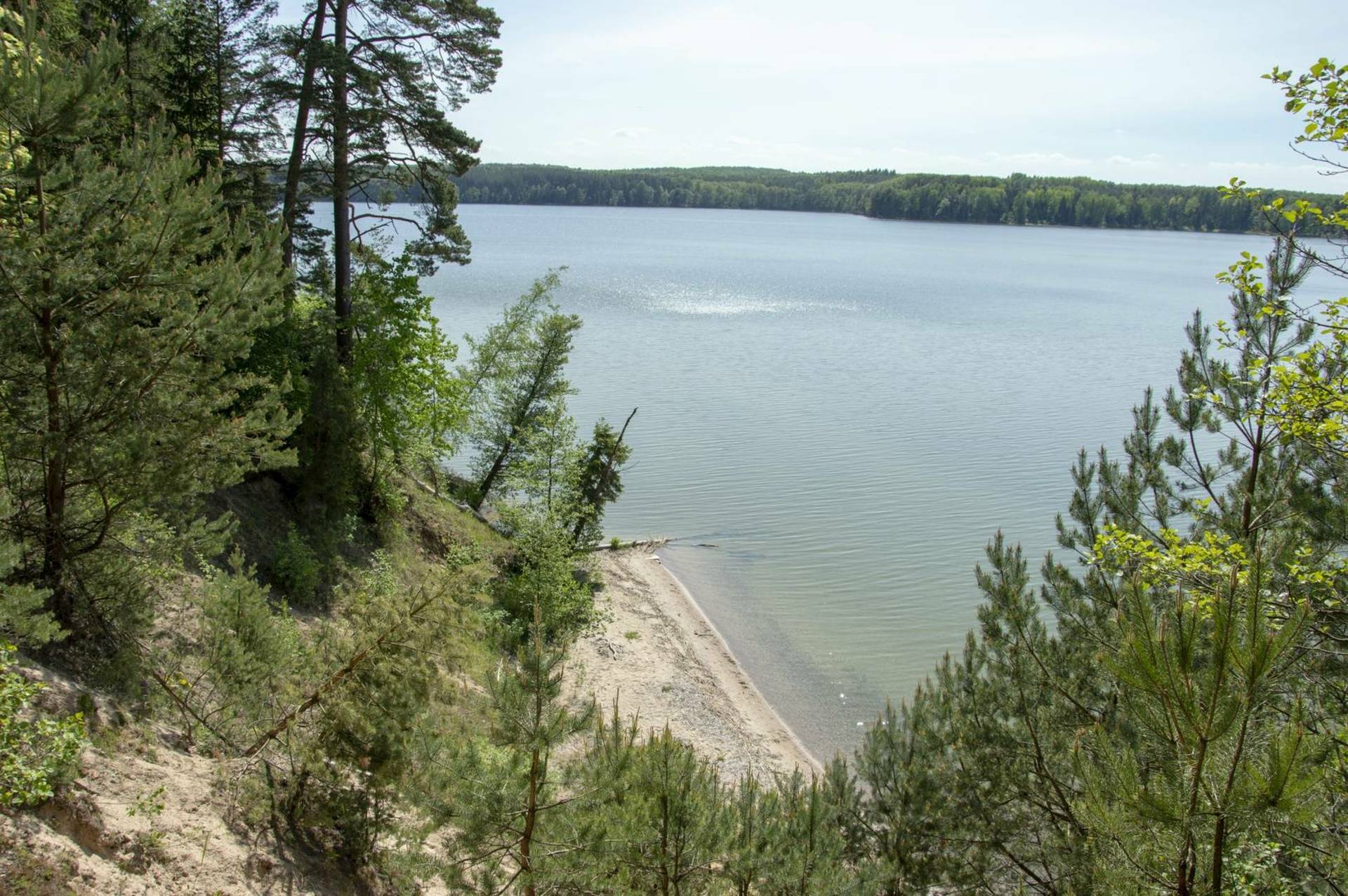
When arriving from Poland, on the Lithuanian side, you immediately enter Vištytis Regional Park, where the Sūduva Upland landscape, its natural ecosystem, and cultural heritage values are protected. We invite you to begin getting acquainted with this protected area by hiking the Šilelis Educational Trail, which winds along the picturesque shore of Vištytis Lake – in some places, gentle slopes can shoot up to 50 meters in height. If you raise your heads up, you will see the “Witch’s Broom” settled in trees, as well as hollow trees, the tallest Vištytis spruce, and halfway along the trail you will find the Holy Spring, from which you may choose either to go back or to continue traveling to the viewpoint “View of Rominta Forest.”
Pavištytis Mound stands like a watcher – it has seen more than one ritual fire and heard more than one glee. This is the highest of all mounds in Vilkaviškis district, reaching 229.5 meters above sea level. You will learn more about this region’s values by visiting the Visitor Centre of Vištytis Regional Park.
It is said that in the Vištytis area, people harvest two crops – one of stones, and then what nature and work have grown. So, in this stone region, we suggest visiting the Vištytis Stone, guarding more than one legend from those testified by the devil’s footprint imprinted on its top.
The pedestrian path “Let’s Travel Ancestors’ Paths” in Tadarinė forest leads not only past mossy trees but also through time. They say wolves walked here, and ancient priests followed their tracks. This is a miraculous place that both frightens and calms down. When walking here, control your thoughts and desires very carefully because the universe can fulfil everything you think about while walking.
If you want to stop for the night, the “Dobilynė” homestead will welcome you with pleasure.
Kačergos Hill, located near the Polish border, is believed to have been a site of idols where men forged signs into stones and women showed respect to goddess Laima.
At Kalvarija Regional Museum, exhibits related to the region’s history, ethnography, contemporary culture, and personalities that locals are proud of are collected, preserved, and presented to the public.
There were mounds of various purposes: some were used for reconnaissance, others for defence, while communities used to live on third ones, and next to them homesteads were established. Today the Baltic household and lifestyle heritage is presented here. In the Ethnographic Pranas Dzūkas Homestead, you can get to know more closely the early 20th-century crafts and the rhythm of daily work that came from the Yotvingian times. You can spend the night on hay here.
Birds, reed beds, swamps – all this was considered gates of sacred places, and Žuvintas Biosphere Reserve is one of the few places where visitors are given the opportunity to observe and hear the never-quiet life of the lake.
The exposition of Alytus Archaeological Museum opens the memory hidden in the depths of the earth – here lie amulets, urns, spears, and clay figurines. According to the Yotvingian tribal customs, it was believed that souls are embodied in trees, so visit the exhibition “When No Trees Were Left for Souls” in the museum and learn about the origins of Alytus region’s history.
Various archaeological findings, most often pottery shards, tell about the life that existed in mounds, so visit the ceramic workshop “Vienaragių Šilas” (the Unicorn Boscage) in Merkinė, where you can feel creation of ceramic products yourself.
We recommend indulging your palate at one of Merkinė’s dining establishments.
Liškiava Mound with the remaining ruins of the southwestern tower attracts not only for beautiful views of Liškiava Church and the Nemunas but also for the stories that here a castle was being built when preparing to repel Crusader attacks, but possibly due to the victory at Žalgiris (Grunwald), its construction was abandoned and left.
One of the symbols of abundance and eternity for ancient people was salt, and this mineral is abundant in Druskininkai waters, so we invite you to visit the Salt Studio, where, by prior arrangement, you can learn how salt is extracted, experience its plasticity, and ability to become a sculpture.
In the past, food was not very easily obtained, a lot of work had to be put in, so a banda (potato cake) made in Dzūkija is like a small sun, baked out of respect for nature’s generosity. In Rima’s Chamber, banda are placed on cabbage leaves and baked in a bread oven heated with birch wood. By booking in advance, you can enjoy undiscovered flavours and old traditions.
Snaigyna (Veisiejai) Observation Tower like a wind whirlwind invites you to rise to a height of 15 meters and observe the wide open spaces – waters, paths, treetops, and sky.
In the exhibition of Lazdijai Regional Museum the experiences of this road are joined: legends, people’s daily life, celebrations, and archaeological findings.
We will end our journey in Lithuania at the mystical private Stone Museum of Donatas Mazurkevičius “Yotvingian Yard”. Here, the set power of nature still recalls the Yotvingian gods, rituals, and idols.
The Yotvingian region attracts with its wild nature, hilly landscapes, and river valleys where wooden castles once stood and ritual songs were sung. We are convinced that here, between the Šešupė, the Nemunas, and the Merkys, you will feel the ancient Baltic world.
_4_11zon.jpg)

_1_11zon.jpg)
_4_11zon.jpg)
.JPG)
.JPG)

_3_11zon.jpg)


.JPG)
_4_11zon.jpg)
_1_11zon.jpg)
_7_11zon.jpg)
_4_11zon.jpg)

_2_11zon.jpg)
_3_11zon.jpg)
_3_11zon.jpg)
.JPG)
.JPG)


Reviews