

Kazlų Rūda Regional Museum Exhibition – Višakio Rūda Household Museum of Valdas Arbašauskas – Spring in Višakio Rūda – Homestead “Gervių Giesmė” – Samanojus – Bird Watching Tower in Novaraistis Ornithological Reserve – Lekėčiai Great Spring – Vaiguva River-Street – Gelgaudiškis Educational Trail – Miestlaukis Mound – Kubiliai Family Apiary – Hammer Museum in Degučiai – Marijampolė Regional Museum – Amalva Swamp Educational Trail.
Distance travelled – slightly more than 200 kilometres.
Duration – 2 days.
If needed, there is an opportunity to stay in Marijampolė at the end of the route.
Embark on a journey through ancient Baltic lands – springs, swamps, mounds, and fireplaces. Discover our ancestors’ worldview, nature’s laws, and historical memory. If you choose this route, you will visit places inhabited by Yotvingians and Upper Lithuanians, so don’t be surprised if seemingly similar places tell different stories. In the 6th -7th centuries, the Upper Lithuanian area in the south encompassed the territory on both sides of the Nemunas, between the Šešupė and the Neris estuaries, and bordered the Yotvingian lands. The Upper Lithuanian tribe (together with Lithuanians) formed the core of the Lithuanian nation, while Yotvingians were famous for their warlike nature.
We invite you to start your journey at Kazlų Rūda Regional Museum Exhibition in the Tourism and Business Information Centre. Here, the secrets and history of the region’s heritage will be revealed to you, you will hear about iron ore mining, forestry customs, and Baltic life in these lands. Kazlų Rūda region is the land of iron and forests, where sacred trees were not cut but spoken to.
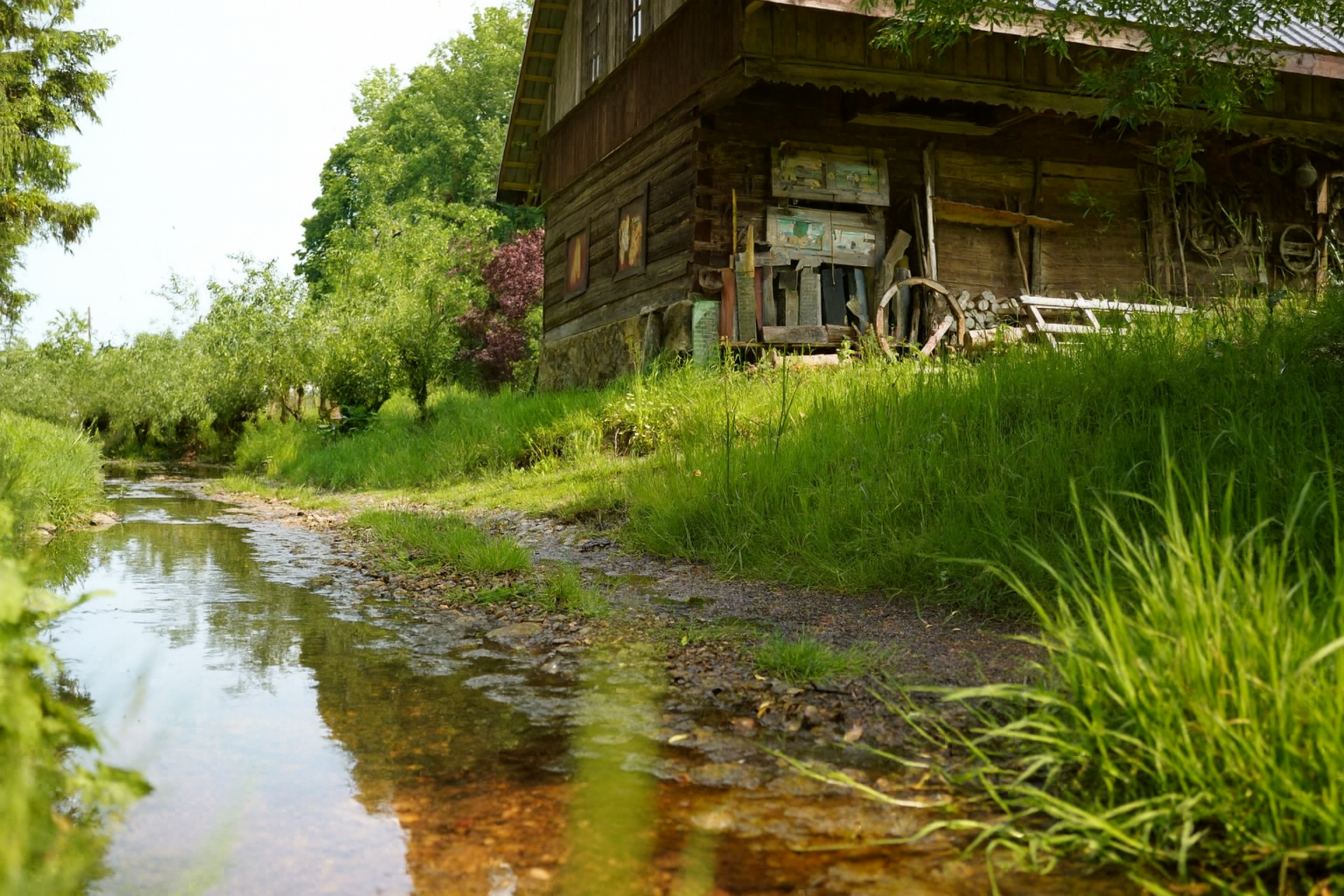
There was an abundance of bog iron ore in spring areas, swampy places, lakeshores, and riverbanks. The bloomeries (old iron extraction facilities) in Višakio Rūda Household Museum of Valdas Arbašauskas testify that people in these regions have been extracting gold-valued iron with the help of fire since the ancient times. You will also see old furniture and farm tools In the museum spaces that tell about daily life that is now unusual for us.
In forested areas, there is an abundance not only of revered trees but also of sacred springs. The Spring of the Old Baltic Sacred Site in Višakio Rūda is a natural miracle because, according to legends, the water here heals the body, and above the spring, the voices of tree spirits whisper.
After fire comes the bird song at “Gervių Giesmė” (Song of Cranes) homestead. This homestead is like a small paradise where peace and natural rhythm remind of the Baltic harmony with the world. We invite you to stop here longer and spend the night in a chosen building – a barn or stuba. At the homestead, you can enjoy sauna pleasures or replenish your knowledge by participating in educational programmes.
When traveling through Kazlų Rūda forests, we also recommend trying sauna pleasures offered by “Samanojus”.
The Baltic spirit lives here between silence and song, while the Bird Watching Tower in Novaraistis Ornithological Reserve is nearby. Representatives of at least 33 bird species included in Lithuania’s Red Book can be seen in the former peat bog, after raising the water level. On autumn evenings, flocks of up to 3,000 cranes land here to rest, so if natural conditions are favourable, you can see unprecedented views when time is counted not in hours but in wing strokes.
According to legends, Lekėčiai Great Spring is also miraculous. Allow yourself to refresh with the constantly gushing spring water (even in winter), and you will unconsciously see how it becomes easier, as if lifting the fog from your eyes. It is said that if you express a sincere wish and wash your hands the water will answer you.
Ilguva Manor is standing on the Nemunas cliff slope between Lekėčiai and Plokščiai. It has not yet revealed all its secrets. The famous Polish violinist, composer, and conductor, founder of the Warsaw Philharmonic, Emil Młynarski called this place “Lithuanian Switzerland.” While living here, he created the famous F-dur symphony and opera “On a Summer Night.”
As legends tell, this place inhabited since the Stone Age is guarded by giant Ilgis, whose four-century-old 32-meter-high three-trunked oak planted by ancient priests in the ravine slope is found only by the most persistent. Many kings, counts, nobles, musicians, writers, and painters have visited the land of the legendary giant Ilgis over many centuries. Visit it yourself.
In Plokščiai, there is a place where the river and people live in one flow. Vaiguva River-Street is an example of how a flowing water current becomes the axis of life because the only way for the residents of this street to get home is through the spring-fed river.
Discover the balance between legends and reality by walking Gelgaudiškis Educational Trail. The trail through mature forest begins at Gelgaudiškis Manor and leads to the old manor park, which allures travellers with one of the largest (as much as 118 ha) forest-type parks in Lithuania with legend-entwined objects – the Assessor’s Grave, the Devil’s Hill, the Barons’ Cemetery, the Hanged Men’s Hill, and of course, the “Star”, a clearing from which paths are cut regularly in eight directions of the world. It is said that this was the wish of hunters as they could see game while dining.
Miestlaukis aka Juodupė (also called “Napoleon’s”) Mound was an ancient observation and defence site near Kudirkos Naumiestis. Here, on the hill, you can still hear the echo of a war horn, which seems to call together the tribes that used to live around – Yotvingians, Nadruvians, Scalovians, and perhaps Lithuanians.
Kubiliai Family Apiary reflects ancient traditions and connection between generations. It is famous in Vilkaviškis district not only for sweet nectar but also for Devynbitė Mead. This is not just a drink – it is a ritual-like experience. Mead here is aged with cold-dried berries, fruits, and medicinal herbs, each of which is important in its own way. We recommend booking a tasting and getting to know this mysterious drink more closely.
The hammer is one of the oldest and most commonly used tools of human civilization. Our ancestors used it to break bones or shells to get food. Currently, the spectrum of hammer use is very wide, so we invite you to visit the Hammer Museum in Degučiai, where you will be presented with a collection of more than 1,400 hammers when pre-arranged.
Marijampolė Regional Museum is a cognitive stop where archaeology, language, daily life, and beliefs intertwine. You can see how people’s way of life has changed, but the basic principles have remained the same: respect for the land, the cycle of time, celebration, and work songs.
According to the elders, a swamp is a path of souls where you can forget time, so the last stop is Amalva Swamp Educational Trail, which will pleasantly delight tired travellers with its shortness – only 121 meters.
May this journey be a small rebirth, a reminder, and a spark of consciousness.


_1_11zon.png)
_4_11zon.jpg)
_5_11zon.jpg)
_11zon.jpg)
_1_11zon.jpg)
_5_11zon.jpg)
_1_11zon.jpg)
_1_11zon.jpg)
_5_11zon.jpg)




Reviews